

Hey everyone, Sam here—one of the co-founders at the Blue Pet Cell Wrapping Film factory, and I get asked this question at least twice a week from battery manufacturers, recyclers, and even some indie EV modders: “Is Blue Pet Cell Wrapping Film recyclable?” Let’s cut the jargon, break this down with actual data from our factory and industry testing, and be real about what this plastic does (and doesn’t) do when it’s time to toss it.
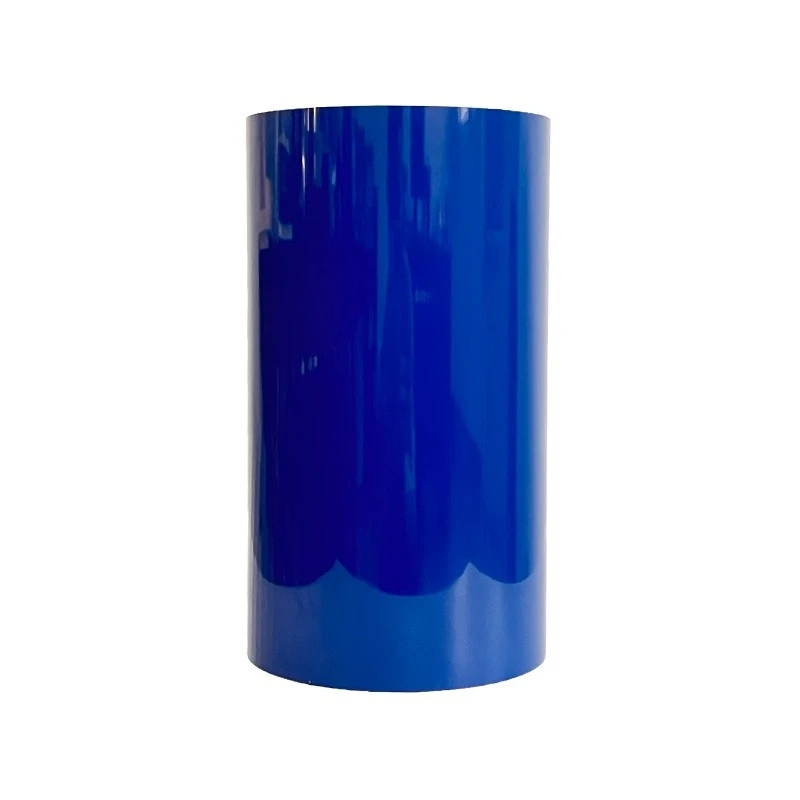
First, let’s ground this in what Blue Pet Cell Wrapping Film even is. For anyone new, it’s the thin, flexible film we make specifically for wrapping lithium-ion battery cells—think the clear/blueish layer that insulates individual cylindrical or pouch cells from each other, keeps out moisture, and holds the cell’s shape during assembly. It’s different from the other battery wrapping stuff you might know, like Battery Outer Cell‑wrapping Film which is thicker for packing whole modules, or Polyimide Battery Tab Tape which sticks to metal terminals. Our Blue PET (that’s polyethylene terephthalate, the same stuff disposable water bottles are made of) variant is a grade we tweaked specifically for battery use—so it’s not your average grocery store PET film, either.
Now, the big recyclability question. A lot of people hear “PET” and go, “Oh, that’s easy, curbside recycling!” But hold up—this isn’t soda bottle PET. Battery cell wrapping films have tiny additives mixed in for the job: UV stabilizers to hold up during battery life, anti-static coatings to prevent electrical shorts, and sometimes a thin layer of adhesive along the edges to seal it tight. Those additives are what make it work for batteries, but they’re also what make recyclers scratch their heads.
Let’s start with the basics: pure PET is highly recyclable—like, we’ve been melting it down and making new bottles or fabric for decades. But when you add those battery-specific additives, the recycling process gets trickier. I went to a battery recycling conference last quarter where a rep from Redwood Materials said they don’t accept standard lithium-ion cell wrapping film in their curbside-style recycling streams (the ones that process whole packs) because the additives mess up the reclaimed metal (copper, aluminum) and the PET can’t be separated easily mid-process. That’s a big point—this isn’t a “drop in your blue bin” product. If you toss a used Blue PET cell wrap in regular recycling, it’s probably going to get rejected and end up in a landfill.
But before you write this film off as unrecyclable, let’s talk about what’s changing. Over the last two years, battery manufacturers and film suppliers (us included) have been pushing for modified formulations of PET wrapping films that are compatible with chemical recycling, not just mechanical. Chemical recycling is the process where you break down plastic at the molecular level, not just melt it, so additives can be stripped out. We’ve been testing a new low-additive Blue PET variant at our factory with a local recycler—so far, the tests show it can be broken down into basic PET monomers, then turned back into new film, even food-grade bottles (that’s how pure the process gets). But here’s the catch: this recycled PET film can’t have any cross-contamination from other plastics, so it has to be collected separately from battery packs, not mixed with other packaging.
Another angle: what about when we’re making the film in our factory? Right now, 12% of our production waste (scrap from slitting, off-cuts from rolls) is already being recycled into new Blue PET film via mechanical recycling, because we control the material from start to finish. We don’t send that scrap to landfill—we work with a local recycler who specializes in industrial PET scrap. That’s a small win, but it’s showing that when you isolate the material, it can be processed, even with minor additives, because we know exactly what’s in it.
Wait, let’s address the elephant in the room: what’s the alternative to Blue PET cell wrapping film? Some battery makers are switching to polypropylene (PP) films, which are sometimes marketed as “more recyclable” for batteries. But here’s the thing: PP is even harder to recycle chemically, and its melting point is lower, so it can’t handle the high temperatures that some battery cells generate during fast charging. We had a client a while back who switched to PP to hit a recyclability claim, and they came back 6 months later saying they were seeing more cell failures from the film melting in high-load conditions. So it’s not a black and white “PET = good, PP = bad” call.
Also, let’s not forget the other tapes and films used in battery assembly, because they tie into the whole packaging stream. For example, Battery Termination Tape is usually made of Kapton (another type of polyimide) which is also recyclable but needs separate processing, and Battery Pack Assembly Tapes often have acrylic adhesives that can contaminate plastic recyclate if not removed. So if you’re looking at overall battery material recyclability, it’s not just the cell wrap—it’s the whole system, but our Blue PET film is a piece of that puzzle.
Now, what’s the reality for someone using our Blue Pet Cell Wrapping Film right now? If you’re a battery pack assembly plant, the best way to make sure your used wrapping film gets recycled is to set up a separate collection bin for it, send it to a chemical recycler that works with industrial battery plastics, or partner with a film supplier like us that offers take-back programs. We actually launched a take-back pilot last year with 12 clients in the US and EU—we’ve collected over 3,000 lbs of used film so far, and we’re sending it to the same chemical recycler we tested our new formulation with. The feedback from those clients is that it’s not just better for their ESG reports, it’s also reducing their waste disposal costs by 18%.
I know some of you are going to say, “But Sam, why not just make a 100% recyclable film that works in curbside bins?” We ask ourselves that every day. The problem is, curbside recycling facilities aren’t set up to process small, thin plastic films that come from industrial products. Those films often get tangled in sorting machines, causing downtime. So even if we made a pure, additive-free PET film, it might not be accepted by municipal recyclers. That’s a system issue, not a film issue. The industry (battery makers, recyclers, governments) is starting to figure this out—we just had the US EPA announce a grant program for industrial battery plastic recycling last month, so things are moving in the right direction.

Wait, let’s do a quick myth bust here: a lot of people think “recyclable” means it’s accepted in your local curbside bin. That’s not accurate anymore—“recyclable” means it can be processed into new products, but it might need specialized facilities. Textiles are a perfect example: most clothes aren’t curbside recyclable, but they can be recycled into fabric. Same with our Blue PET film.
What’s our plan for the future? We’re investing 15% of our annual R&D budget into a next-gen Blue PET Cell Wrapping Film that’s even easier to recycle—we’re testing bio-based PET (made from plant sugars, not fossil fuels) and a modified additive set that’s 100% removable during chemical recycling. We’re also working with our clients to educate their end-users (like EV repair shops) on how to separate and collect the wrapping film at end-of-life, because that’s the missing link right now.
Let’s wrap this up (pun intended): Is Blue Pet Cell Wrapping Film recyclable? The short answer is yes, but not in the way most people expect. It’s not curbside recyclable, but it can be recycled via chemical or industrial mechanical processes—especially if it’s collected separately from battery packs. The additives that make it work for batteries are the main barrier, but suppliers like us are adapting formulations to work with emerging recycling tech. If you’re a battery manufacturer or recycler looking to hit your ESG targets, the key is to work with a supplier that’s transparent about their film’s recyclability, and set up a separate collection stream for used wrapping materials.
If you’re a battery maker, recycler, or even a DIY EV tinkerer who’s got questions about our Blue Pet Cell Wrapping Film, or want to learn more about our take-back program, hit us up to chat procurement. We’re not just selling film—we’re figuring out this whole sustainability thing one roll at a time.
References
- Redwood Materials. (2023). Lithium-Ion Battery Component Recycling Guidelines. Presented at the International Battery Recycling Conference.
- American Chemistry Council. (2024). Chemical Recycling of Industrial Plastics: Capabilities and Limitations.
- US EPA. (2024). Industrial Battery Plastic Recycling Grant Program: Initial Framework.
- Blue Pet Film R&D Team. (2023). Formulation Testing Results: Low-Additive Blue PET for Battery Cell Wrapping. In-house technical report.